What a Commercial Rubber Floor Has to Do
A rubber floor in a commercial fitness space is solving three problems at once, and they pull in different directions.
The first is force reduction: absorbing the energy of a dropped plate so it does not travel into the slab. The second is acoustic isolation: stopping that same impact from arriving as noise in the suite below, which in a GTA condo is usually written into the building declaration as a hard limit. The third is durability, because a gym floor takes point loads from rack feet, dragged benches, and dropped steel that would destroy most commercial coverings.
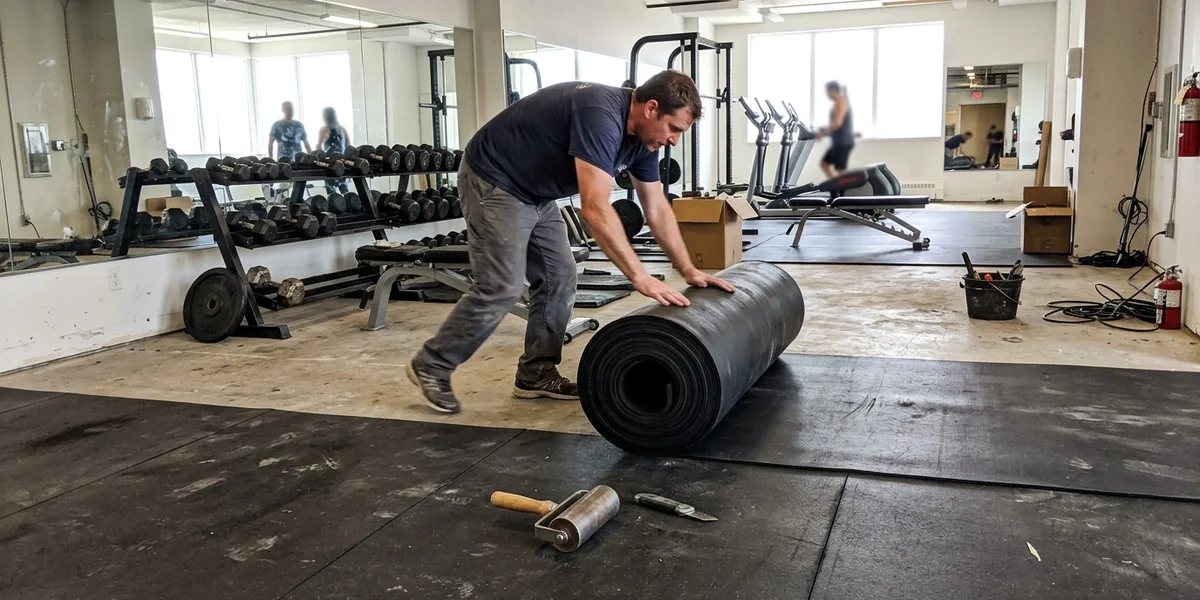
Commercial Flooring Toronto installs Mondo, Ecore, Nora Systems, and Roppe vulcanized rubber across the GTA, bedded in polyurethane adhesive over a tested and prepared slab, with dual-layer acoustic build-up where the building requires it.
5 Spaces We Install Commercial Rubber In
- Condo amenity gyms. Acoustic isolation is the governing constraint, not the wear surface.
- Independent fitness studios. Mixed zones: cardio, functional, and a free-weight area needing a thicker platform build-up.
- University and school sports facilities. High volume, long hours, and a maintenance team that needs a floor cleanable with a neutral mop.
- Corporate wellness centres. Lower impact, higher expectation on finish and consistency.
- Clinics, labs, and long-term care. Non-porous Nora Systems rubber with welded seams and coved junctions, a different product class entirely.
How Much Does Rubber Gym Flooring Cost in Toronto?
Athletic rubber runs $8 to $18 CAD per sq ft installed. Nora healthcare rubber runs $16 to $22 CAD per sq ft.
| Cost factor | Effect on the installed rate |
|---|---|
| Product class | Athletic $8 to $18, Nora healthcare $16 to $22 CAD per sq ft |
| Wear thickness | 6 to 10 mm for cardio zones, 15 mm and up for drop platforms |
| Acoustic build-up | Dual-layer isolation priced against the stated impact-noise limit |
| Format | Rolled rubber glued down, or interlocking tiles where demountable |
| Substrate preparation | $2 to $6 CAD per sq ft for grinding, sealing, and levelling |
| Existing floor removal | $1.50 to $4 CAD per sq ft, mats and foam always come out |
The mistake that gets floors rebuilt
Specifying one thickness for the whole room. Uniform build-up either over-specifies the cardio area or under-protects the slab where weights actually land. Zoning the floor costs less and performs better.
When Do You Replace a Gym Floor?
Open seams are the first signal. Once a seam separates, dirt enters, the edges curl, and the gap becomes a trip hazard that no repair closes permanently. Permanent indentations under rack feet mean the build-up was too thin for the load. Surface crumbling or a persistent odour usually means low-grade recycled crumb rubber that will not improve with cleaning.
Noise complaints from the floor below are the most decisive one. That is not a wear problem, it is a specification problem, and the only fix is lifting the floor and rebuilding it with proper acoustic isolation.
Working With the Rest of the Facility
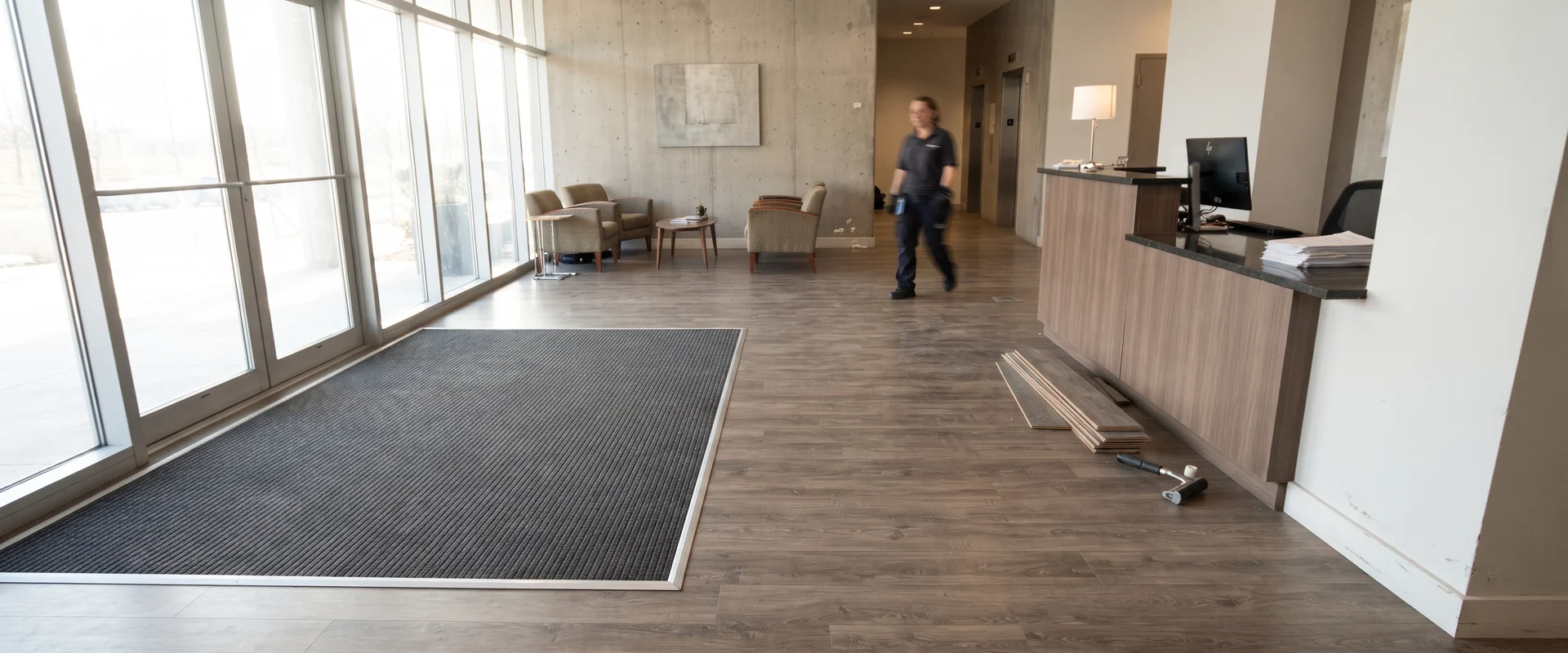
A fitness or amenity build rarely stops at the gym floor. Change rooms and wet areas need welded sheet vinyl or Altro safety flooring rather than rubber. Back-of-house, plant rooms, and any area with rolling loads suit a resin coating. Lobbies and circulation run LVT or carpet tile with entrance matting at the doors.
We self-perform all of it, so the whole facility sits on one written quote, one sequence, and one workmanship warranty. Where a general contractor is running the project, our commercial flooring contractor scope covers CCDC 2 coordination, WSIB clearance, and $2M commercial general liability.