What a Resinous Floor Coating Actually Is
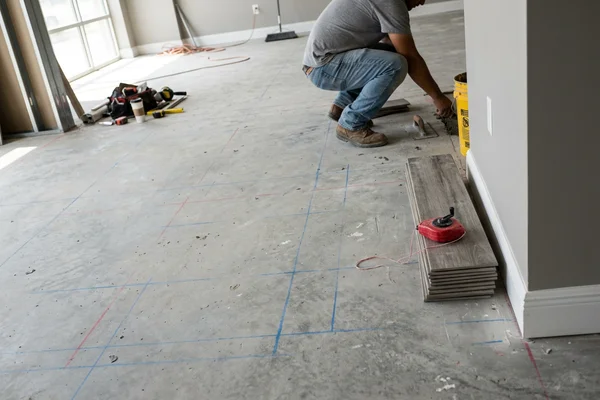
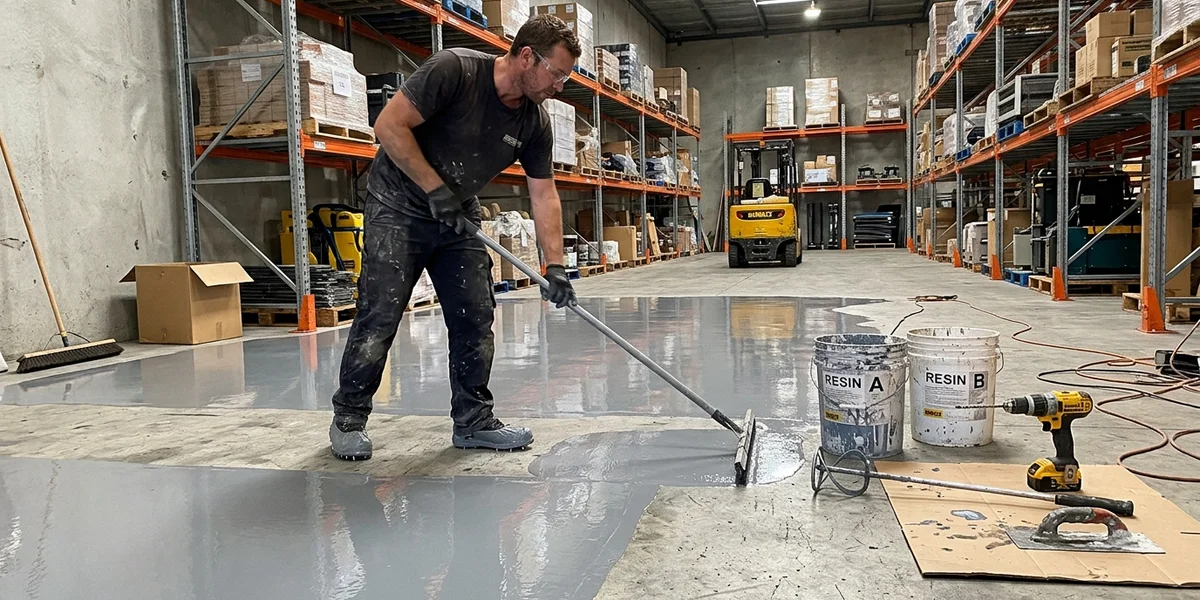
A commercial floor coating is a resin system bonded mechanically to a prepared concrete slab. It is not paint, and the difference is entirely in the preparation. The slab is profiled by planetary diamond grinding or shot blasting to an ICRI CSP 3 to 5 surface, cracks are chased and filled, joints are treated, and only then does a basecoat go down, followed by a topcoat.
The two systems that cover most GTA commercial work are 100% solids epoxy and single-day-cure polyaspartic. Epoxy builds thicker, costs less, and resists aggressive chemistry well, but it needs 24 to 72 hours before heavy traffic and it ambers under sunlight. Polyaspartic is an aliphatic chemistry that cures in hours, stays colour-stable, and hands a bay back to forklifts the next morning.
For washdown environments neither is correct. Urethane cement is the system built for thermal shock, and it is what a CFIA-regulated kitchen, brewery, or processing area needs. Commercial Flooring Toronto applies all three, which means the recommendation is based on your environment rather than on what a single-system applicator happens to carry.
4 Facility Types We Coat Across the GTA
- Distribution centres and warehouses. The 401, 407, and 400 corridors through Mississauga, Brampton, Vaughan, and Ajax. Polyaspartic with anti-slip aggregate at dock aprons and full aisle striping.
- Manufacturing plants. Chemical-resistant 100% solids epoxy, equipment footprints marked, and coving where spillage collects.
- Food and beverage processing. Urethane cement with integral coving and falls to drain, specified for hot washdown and CFIA expectations.
- Automotive service bays and fleet garages. Oil and hydraulic-fluid resistant systems with a topcoat that cleans rather than stains.
How Much Does Commercial Epoxy Flooring Cost in Toronto?
Commercial epoxy in Toronto costs $6 to $15 CAD per sq ft installed and polyaspartic $8 to $14 CAD per sq ft. Urethane cement for washdown areas runs $12 to $18 CAD per sq ft.
| Cost factor | Effect on the installed rate |
|---|---|
| Square footage | Large continuous floors price lower per sq ft; small isolated bays price higher |
| Slab condition | Crack chasing, joint fill, and spall repair are quoted as separate visible lines |
| Surface prep depth | Heavier contamination or an old coating means more grinding passes |
| Moisture mitigation | Priced only after ASTM F2170 readings are in, never assumed |
| Downtime tolerance | Polyaspartic costs more per sq ft than epoxy and buys back lost shifts |
| Aggregate and striping | Anti-slip broadcast and line marking quoted by area, not blanket-applied |
The number that decides the budget
Not the resin. It is how much preparation the slab needs. A clean, sound, previously uncoated floor is the cheapest square footage we will ever quote. A floor with a failing coating on it needs full removal first, and that changes the arithmetic entirely.
When Do You Need to Recoat?
Watch for four signals. Loss of sheen across traffic aisles means the topcoat is wearing and a refresh now is far cheaper than a rebuild later. Pin-holing or blistering means moisture is pushing from below and needs testing before anything else. Edge lifting at joints or the dock apron means the original preparation was inadequate in that zone. And any exposed concrete inside a picking aisle means the system has already failed locally and will spread.
A topcoat refresh on a sound basecoat is a fraction of the cost of a full rebuild, which is why an annual walk-through in a high-traffic distribution centre pays for itself.
Scheduling Around Racking, Peaks, and Other Trades
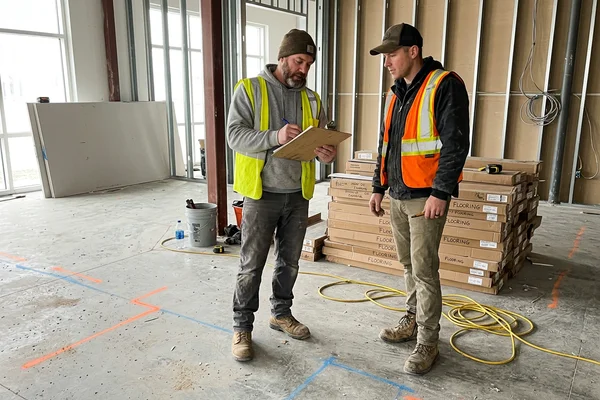
On a new build the coating window sits between slab cure and racking installation, and that window almost never moves. We confirm the concrete pour date at quoting and work backward to the moisture testing dates so the readings are in before the racking installer arrives.
In an occupied building the sequence inverts and we coat in bays around live picking aisles. Where the project runs under a general contractor, our commercial flooring contractor scope covers CCDC 2 coordination, current WSIB clearance, and $2M commercial general liability, and we sequence with the concrete and racking trades directly.
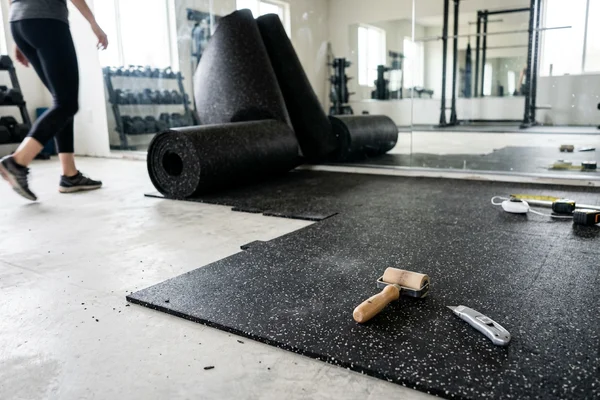
Facilities that need resin in the plant and resilient flooring in the offices usually run the coating alongside commercial flooring installation and, where there is a gym or amenity space, rubber flooring, all on one written quote with a single workmanship warranty.